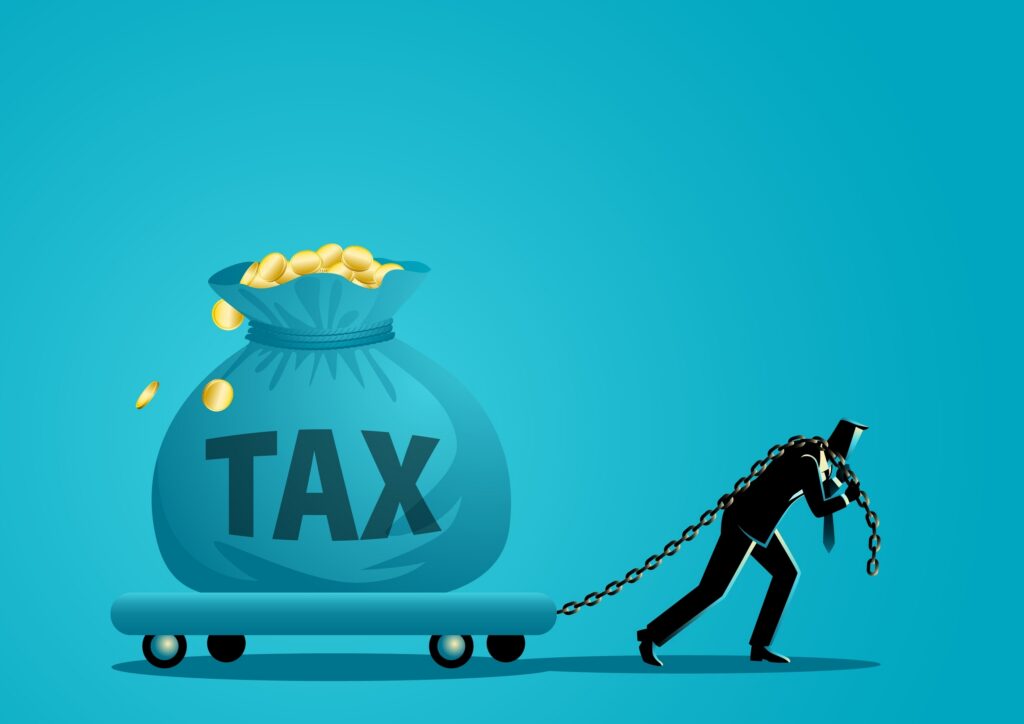
The price of a choice: increase taxes or cut spending? In a scenario where public debt has grown—from 71.7% of the GDP in December 2022 to 82.9% in August 2026—the federal government has sought to boost its revenue, in part, through changes to tax legislation.
However, the federal government’s recent decisions raise questions regarding the coherence of the measures adopted to achieve fiscal balance.
Balancing public accounts remains one of the federal government’s primary challenges: rising indebtedness, compounded by the pressure of mandatory expenditures, has necessitated measures to increase tax collection and reduce the fiscal deficit.
Part of this strategy has focused on the taxation of income and financial assets, with significant changes that have particularly affected investors and higher-income taxpayers—the so-called “super-rich.”
One of the initial changes involved “exclusive funds” (private investment funds), which are now subject to a 15% tax levied on a semi-annual basis.
Another significant change concerns offshore entities, whose annual profits are now subject to a 15% tax.
The government estimates that these measures will generate approximately R$ 10 billion to R$ 11 billion in annual revenue.
More recently, a “minimum income” taxation framework was introduced, establishing new rules for the taxation of profits and dividends, while simultaneously expanding income tax exemptions for lower-income taxpayers. This new taxation was implemented to offset the loss in revenue resulting from the expansion of tax exemptions for taxpayers earning up to R$ 5,000—a loss the government itself estimated at R$ 28.04 billion for 2026.
The government’s initial expectation was to collect approximately R$ 28 billion in 2026 through the withholding tax on dividends. However, this projection was later revised downward to R$ 17.2 billion. By July, actual tax collection had reached R$ 3.14 billion (according to data from the Federal Revenue Service itself), highlighting that the government’s initial projections for offsetting the revenue loss fell short.
A development running counter to the expansion of taxation is the federal government’s recent decision regarding the prohibition of sports betting and online games—commonly known in Brazil as “bets.”
This sector, regulated by Law No. 14.790/2023, had begun operating under specific rules for authorization, oversight, and taxation, becoming a significant source of public revenue.
Nevertheless, on September 25, the federal government prohibited the operation, offering, intermediation, and advertising of fixed-odds betting within the national territory.
The decision was based, among other factors, on the social impacts associated with betting—specifically household indebtedness and risks to public health. However, the official rationale for the measure acknowledges its fiscal cost: a reduction in tax revenue of approximately R$ 12 billion between 2026 and 2028 (R$ 1.54 billion in 2026, R$ 5.15 billion in 2027, and R$ 5.33 billion in 2028), in addition to a loss of about R$ 269 million in regulatory fees over the same period.
Other measures approved on the eve of the elections also warrant attention. One example is the subsidy of R$ 2.12 per liter of diesel, which took effect on September 27. This extension lasts for 30 days and, curiously, ends the day after the second round of the elections. This measure alone will cost the public coffers R$ 10.5 billion.
What price will be paid for these decisions? Which taxes will be raised if there are no cuts to government spending? While certain legislative changes seek to increase revenue from income and investments, other decisions may place further strain on public accounts.
It is clear that revenue generation cannot be the sole criterion for formulating public policy. Protecting public health, consumers, and families is also a legitimate objective of the State. But at what cost? These choices underscore the need for a broader discussion regarding the long-term fiscal sustainability of Brazil. The potential for further tax increases may have reached its limit, making the need to focus on spending cuts increasingly apparent.
By Igor Ribeiro Ferreira, an attorney at Candido Martins Cukier.